
Wool is one of the reasons Waverley Mills exists at all.
More than 150 years ago, there was enough belief in the quality of wool grown in Tasmania that machinery, looms and skilled Scottish weavers were brought halfway around the world to weave it properly.
That confidence was not misplaced.
Tasmania has a long and proud history as one of Australia's great wool-growing regions. Much of that story can be traced back to the pioneering work of Eliza Forlong, who travelled to Saxony in the early nineteenth century to source some of the world's finest Merino sheep. The genetics she helped introduce to Australia would shape the future of the nation's wool industry.
Those sheep found an ideal home in Tasmania. 
The island's cool climate, reliable rainfall and long growing seasons allow sheep to produce fibre slowly and consistently. Native grasslands, improved pastures and generations of careful breeding have helped establish Tasmania as a producer of exceptional wool, sought after for its softness, brightness and comfort.
At Waverley Mills, wool is not simply a raw material.
It is something we work with every day.
One of the first things you learn in a weaving mill is that not all wool is the same.
A blanket designed for a bedroom requires different characteristics to one designed for a campfire. A scarf worn against the skin demands a different fibre to a blanket expected to withstand muddy paws and daily use.
The art lies in selecting the right wool for the right purpose.
The most common way of measuring wool is by micron — the diameter of an individual fibre.
As a general rule, finer fibres feel softer against the skin, while broader fibres offer greater durability and resilience. Neither is inherently better. They simply perform differently.

For the Tasman Tartan collection, we selected four distinct wool specifications, each chosen for the way the finished product would be used.
18 Micron Merino
The Tasman Tartan scarf is woven from fine 18 micron Tasmanian Merino wool.
At this level of fineness, the fibres bend easily against the skin, creating a remarkably soft handle and exceptional comfort. The scarf feels light, refined and easy to wear, while still providing the natural warmth and breathability that Merino wool is known for.
For a product worn directly against the neck and face, softness matters.
Eighteen micron wool delivers it beautifully.
22 Micron Merino
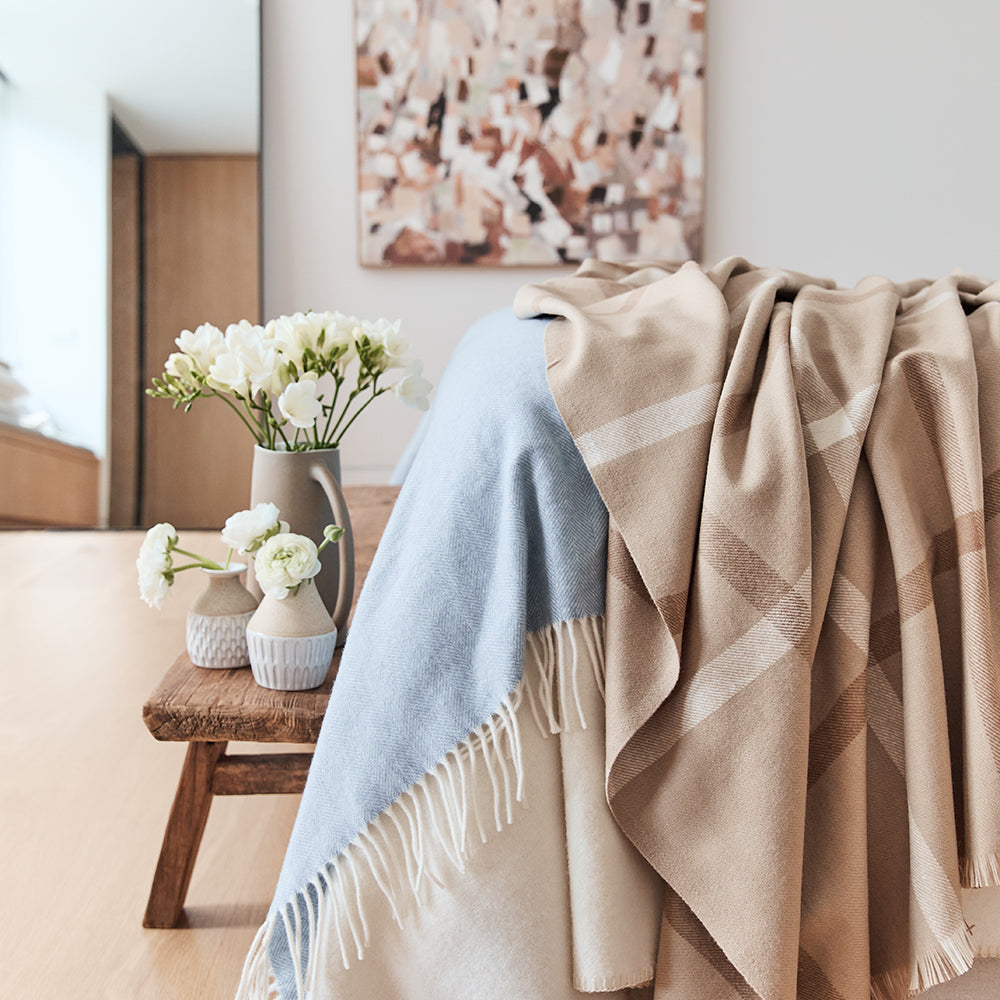
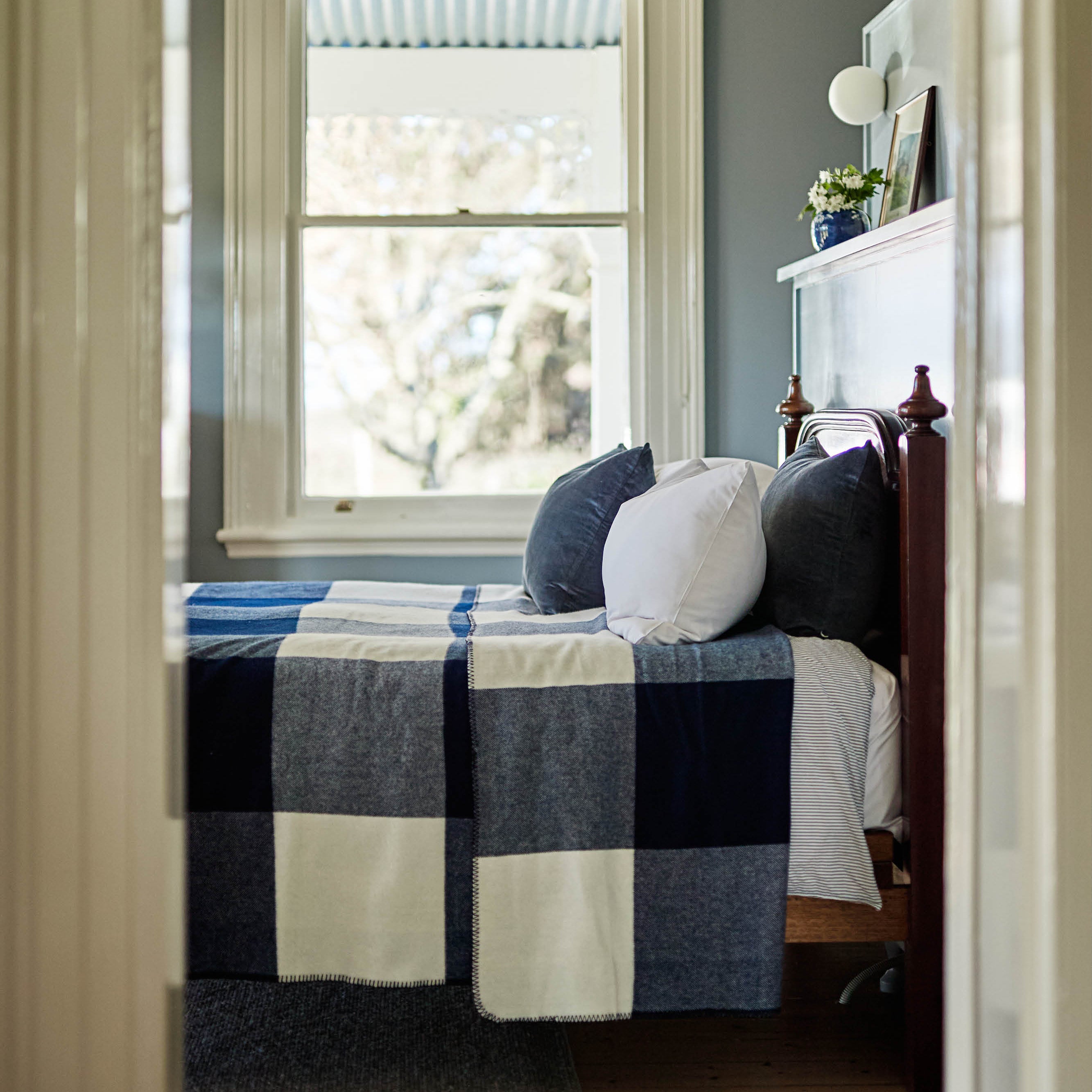
The Tasman Tartan bed blanket is woven from 22 micron Australian Merino wool.
Often regarded as one of the most versatile wool categories available, 22 micron wool balances softness with durability. It provides the comfort people expect from a premium blanket while offering the resilience required for everyday use.
A blanket should do more than feel good in a showroom.
It should provide warmth through winter after winter.
This is the wool that allows it to do exactly that.
29 Micron Wool
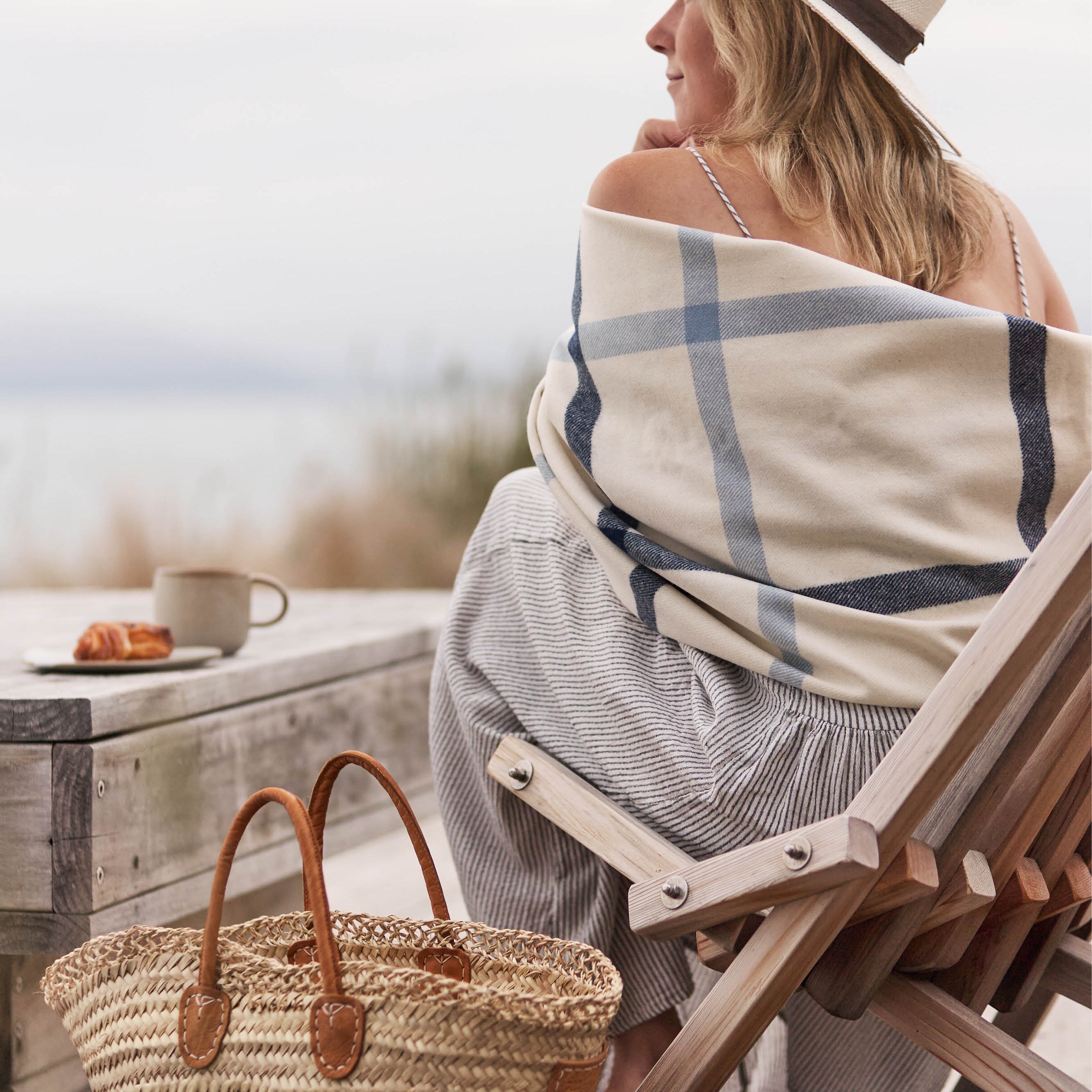
The Tasman Tartan camp blanket was designed with a very different purpose in mind.
For this piece, we selected durable 29 micron wool and heavily milled the finished blanket to create density, warmth and resilience.
This is not a fibre chosen for delicacy.
It is chosen for performance.
The resulting blanket is dense, robust and designed for outdoor life. Around a fire. Across a swag. Rolled into the back of a vehicle. Taken wherever warmth is required.
For generations, wool of this type has been trusted by stockmen, campers and travellers because it simply works.
Matching Fibre to Function
Every product in the Tasman Tartan collection begins with the same material.
But not the same wool.
The scarf, bed blanket, camp blanket and pet blanket each required a different fibre, a different construction and a different approach.
That is the advantage of working directly with wool every day.  Understanding not simply where it comes from, but how it behaves.
At Waverley Mills, wool has never been a trend.
It is the material our mill was built around.
The reason weaving came to Tasmania in the first place.
And after more than 150 years, we remain convinced there is no better fibre for creating products designed to provide warmth, comfort and durability for generations.
Because before Tasman Tartan became a collection, it began as something much simpler.
Wool grown on grass.
On an island that has been producing some of the world's finest fibre for more than two centuries.