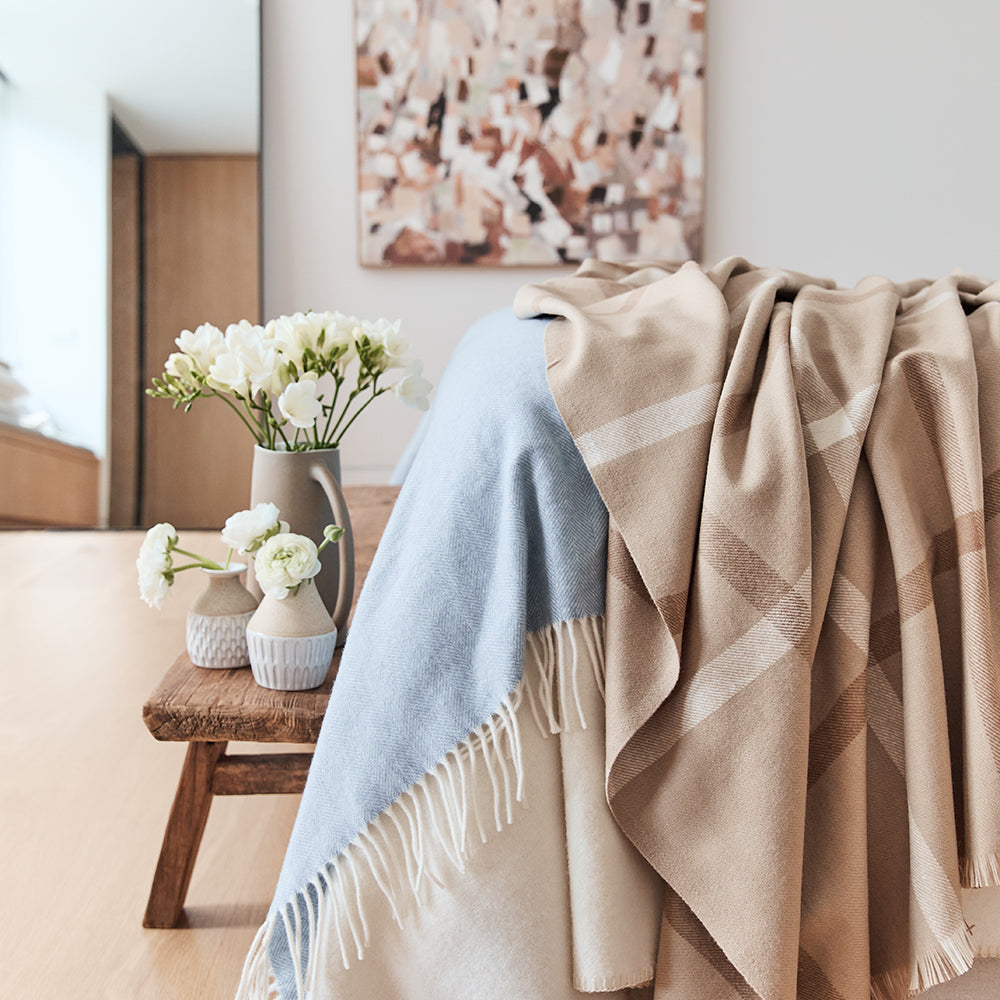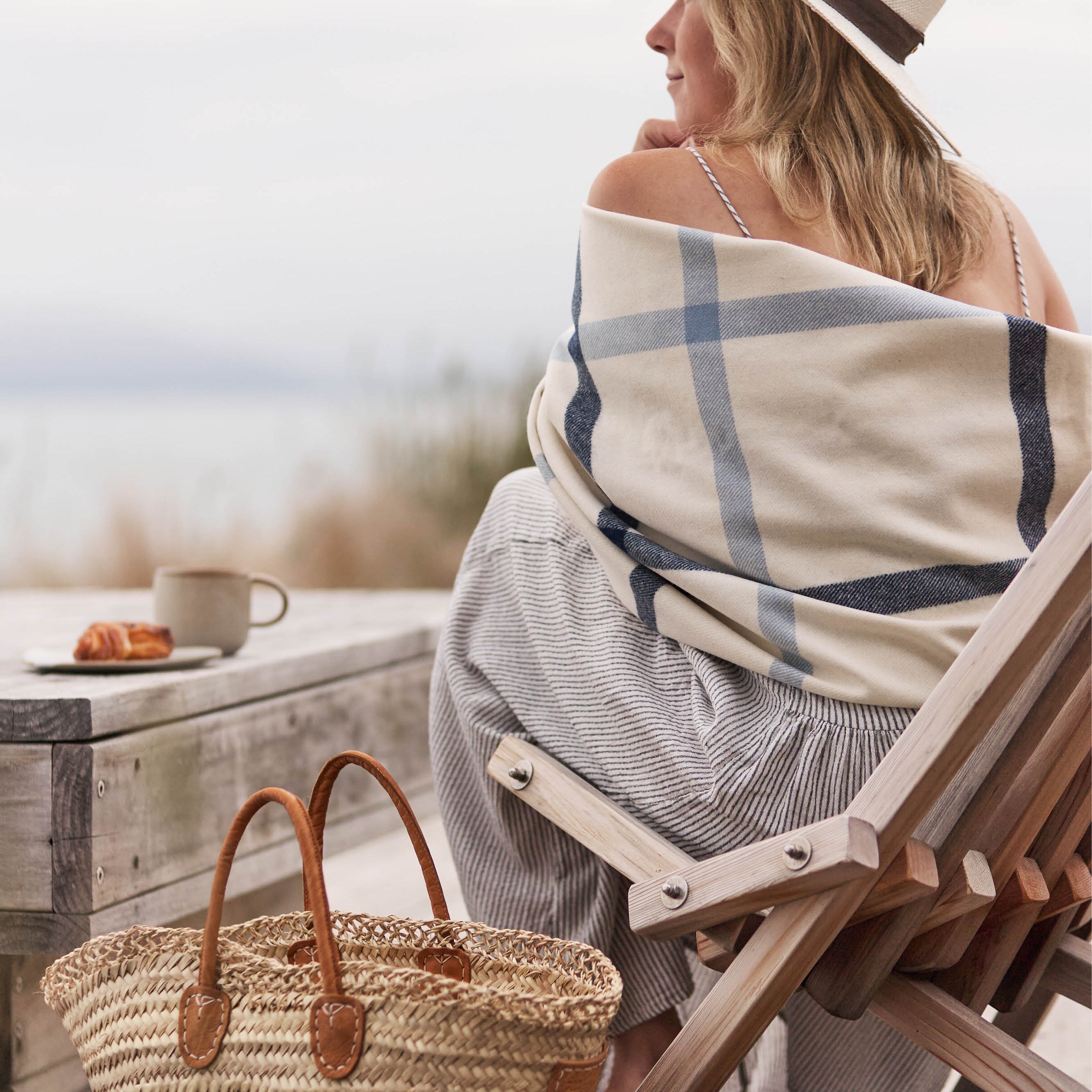

Tasmania softens colour.
Spend enough time here and you begin to notice it.
Coastal light shifts quickly. Water moves from deep blue to silver in a matter of minutes. Sandstone changes from honey to ochre as clouds pass overhead. Even familiar landscapes rarely present themselves in a single tone for very long.
The island's colours are rarely bold or fixed. They are shaped by weather, distance and light.
Tasman Tartan was designed within those conditions.
Its palette draws on two distinctly Tasmanian references: Bass Strait and Maria Island.
Straits Blue takes its name from Bass Strait — the stretch of water that separates Tasmania from mainland Australia and defines life on an island at the edge of the Southern Ocean. 
The colour reflects deep water, distant horizon lines and the ever-changing weather systems that move across the strait. Depending on the season, Bass Strait can appear steel grey, deep blue or almost silver. It is powerful, unpredictable and inseparable from Tasmania's identity.
Maria Tan takes its inspiration from the sandstone landscape of Maria Island. 
Off Tasmania's east coast, the island's cliffs, beaches and historic buildings have been shaped by wind, salt and time. Throughout the day the sandstone shifts through a remarkable range of colours — warm honey tones in morning light, soft ochres by afternoon and muted browns as evening settles across the island.
Rather than reproducing these colours literally, the palette captures something of their character.
Straits Blue brings depth and coolness.
Maria Tan brings warmth and grounding.
Together they create a quieter interpretation of tartan. A balance of land and sea. Warmth and weather. Two colours shaped by the same island.
Designed to sit naturally within contemporary Australian interiors rather than dominate them.
At Waverley Mills, we have always believed good design begins with observation.
Looking carefully at the places around us.
Understanding how people live.
Paying attention to how materials, light and landscape interact over time.
Tasman Tartan reflects that approach.
A palette shaped not by trend forecasts or seasonal colour charts, but by Tasmania itself.
Because at this latitude, colour behaves differently.
And perhaps that's exactly why it endures.